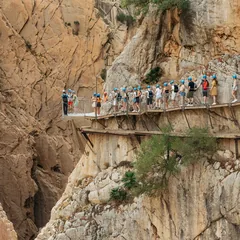
Here is the thing every listing assumes you already know, and almost nobody does until they are standing at the wrong end of a gorge: the Caminito del Rey is one-way. You enter at the northern access near Ardales, you walk south, and you come out at El Chorro several kilometres by road from where you left the car. There is no walking back. A shuttle bus runs between the two ends, and whether your ticket includes it is the single most practical difference between the listings on this page.
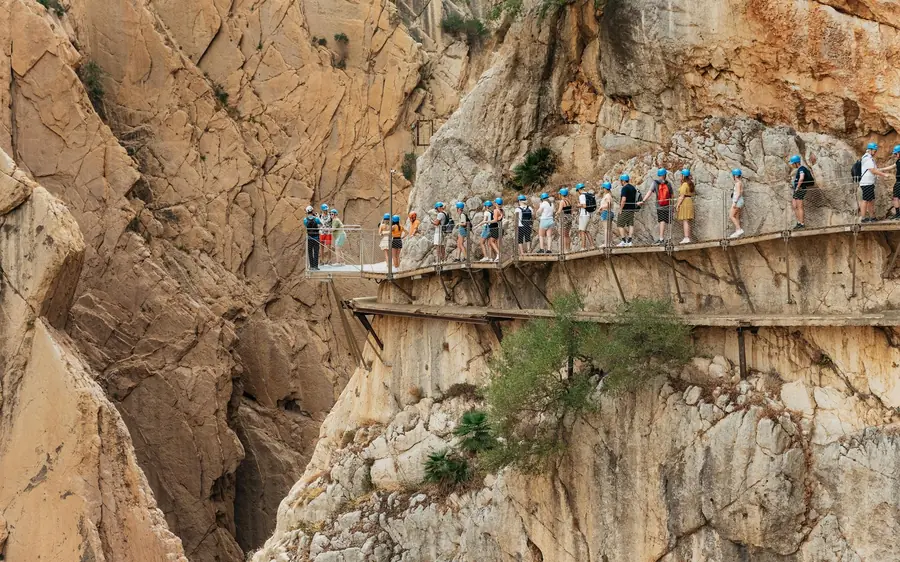
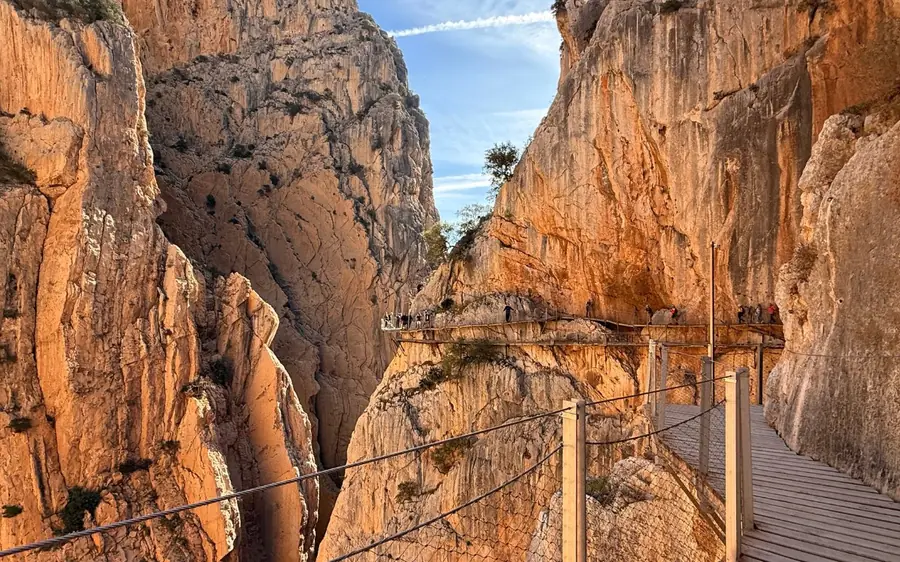
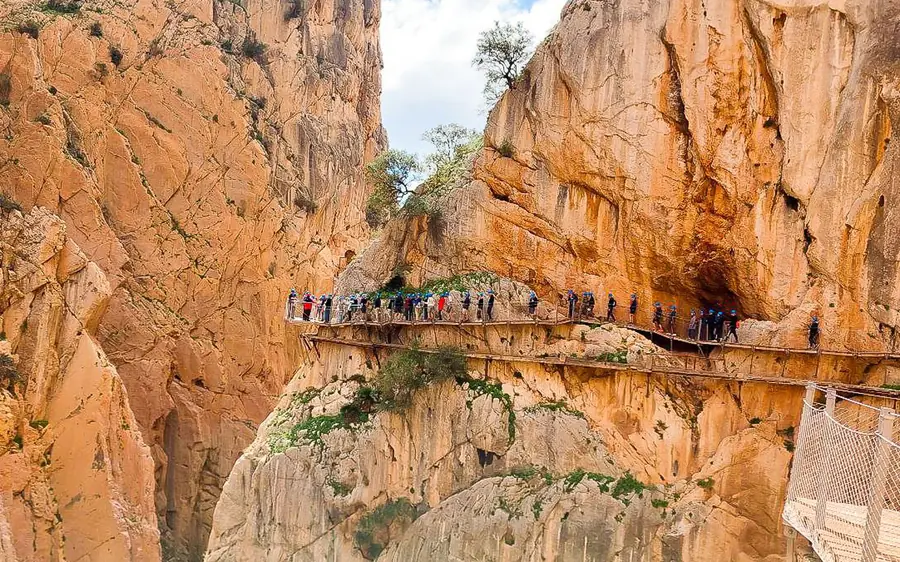
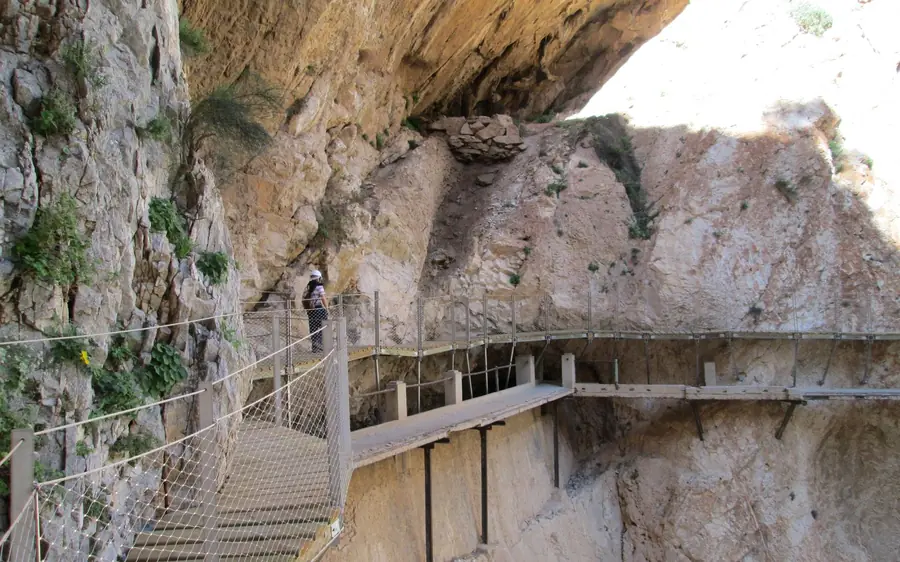
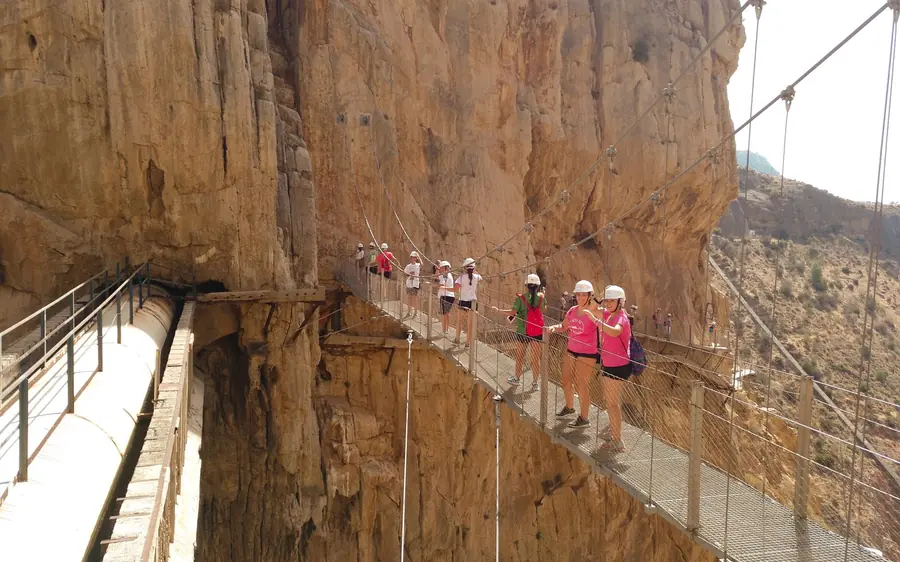
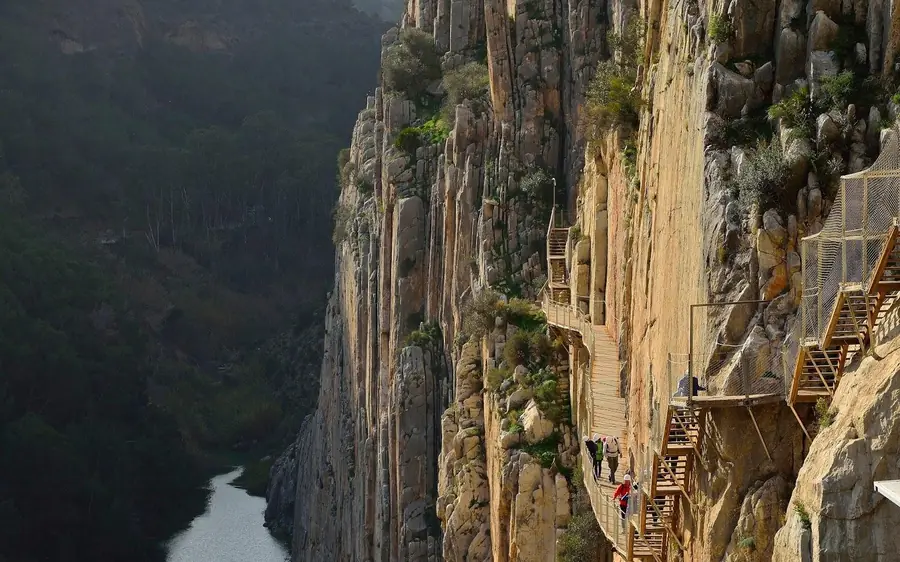
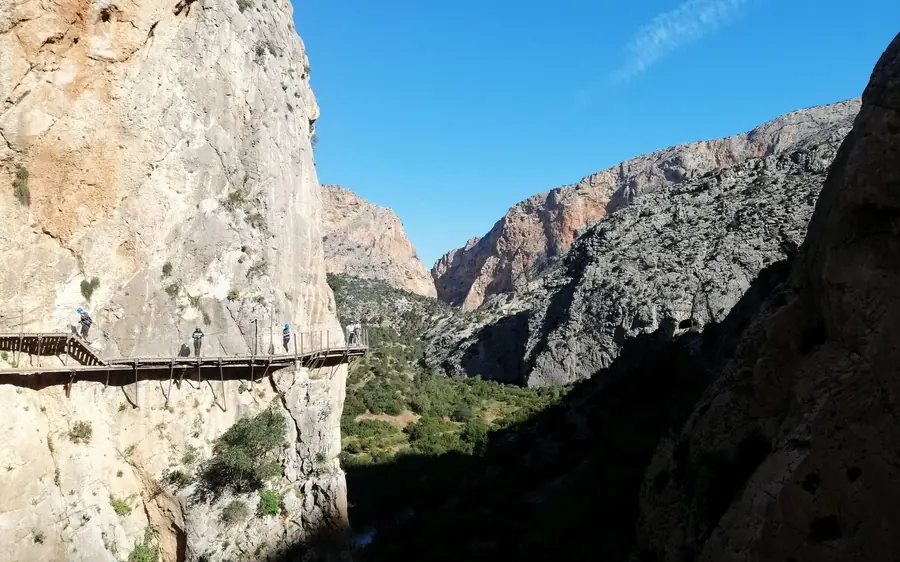
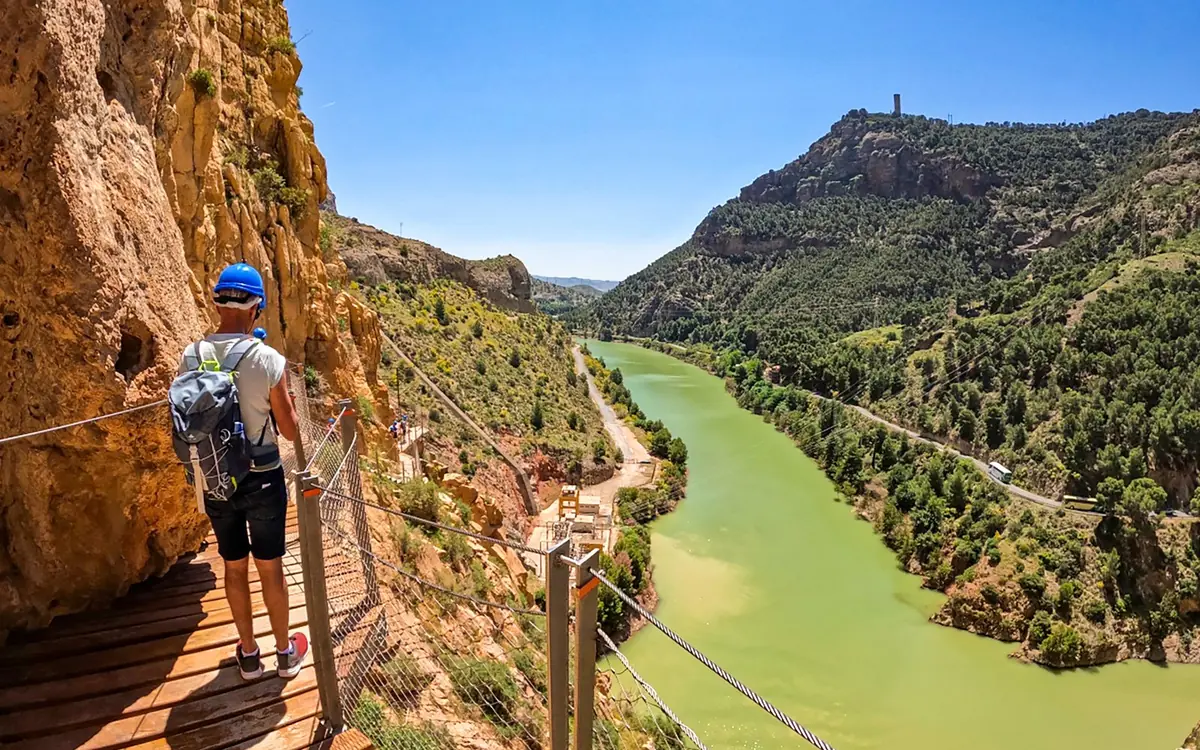
The boardwalk is not the whole route. The full walk is about 7.7 kilometres including the access paths, and the spectacular part — the walkway bolted to the cliff — is about 2.9 of those. The rest is an ordinary gravel path through pine woods, pleasant and entirely unremarkable. People who have seen only the photographs sometimes spend the first twenty minutes wondering when it starts.
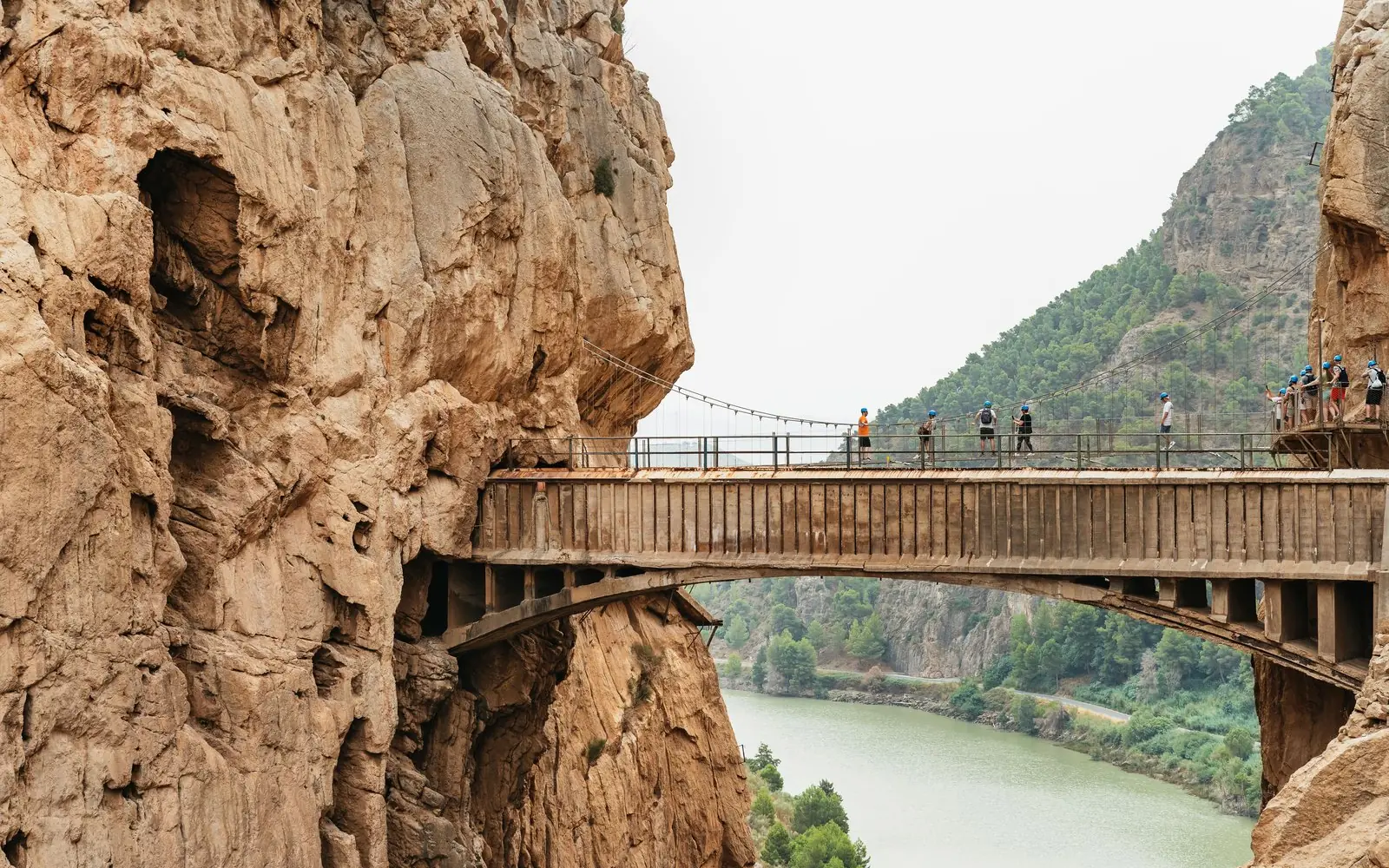
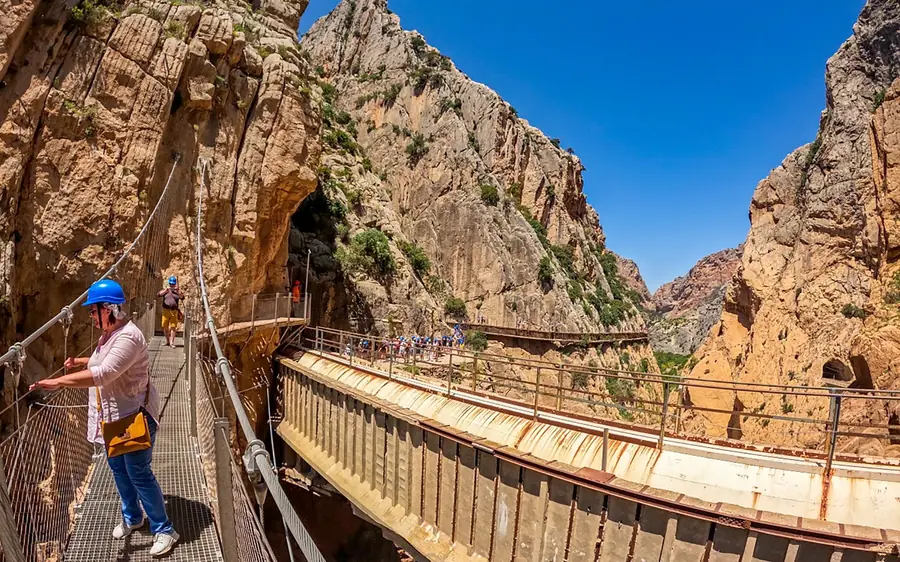
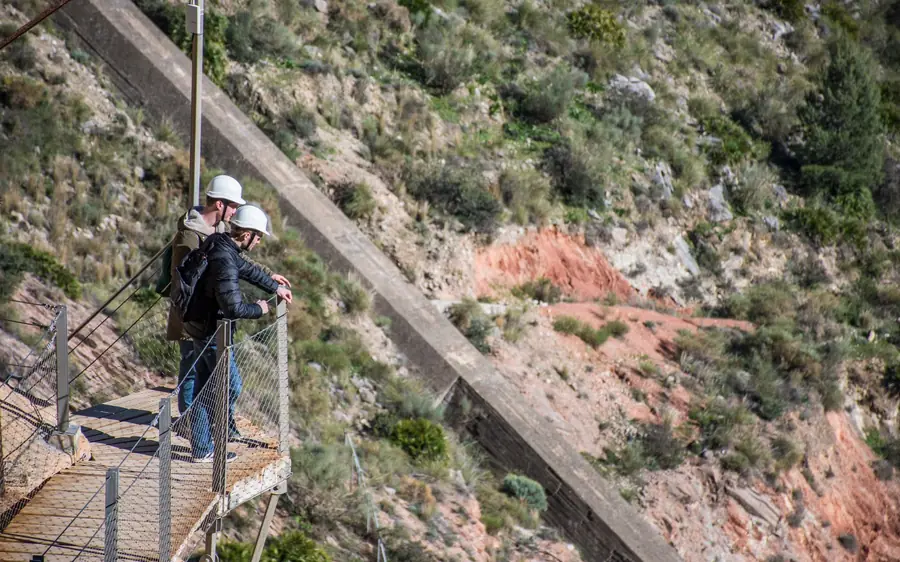
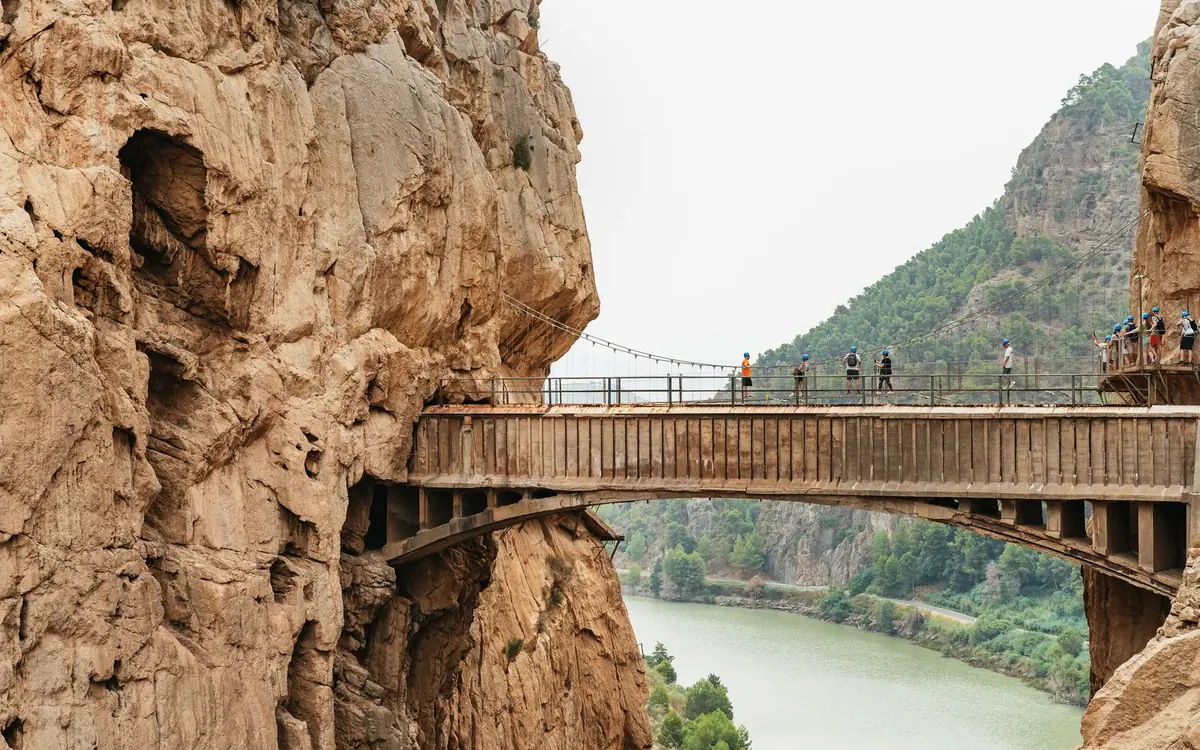
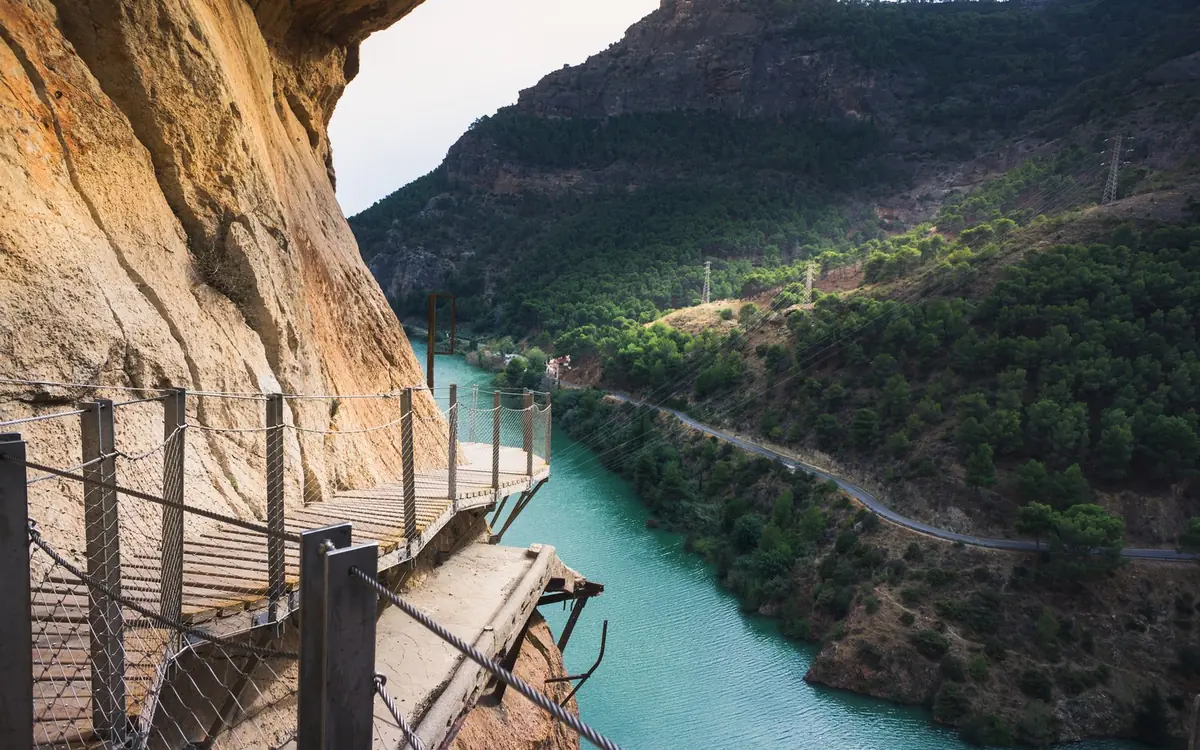
What you are walking on is a 2015 replacement. The original path was built in 1905 to let workers move between two hydroelectric plants, and it was named after Alfonso XIII, who walked it in 1921. By the 1990s it had crumbled to the point where sections were bare steel rods, and it was closed for thirteen years. In several places the old concrete is visible directly below the new walkway, and it is the most eloquent thing on the route.
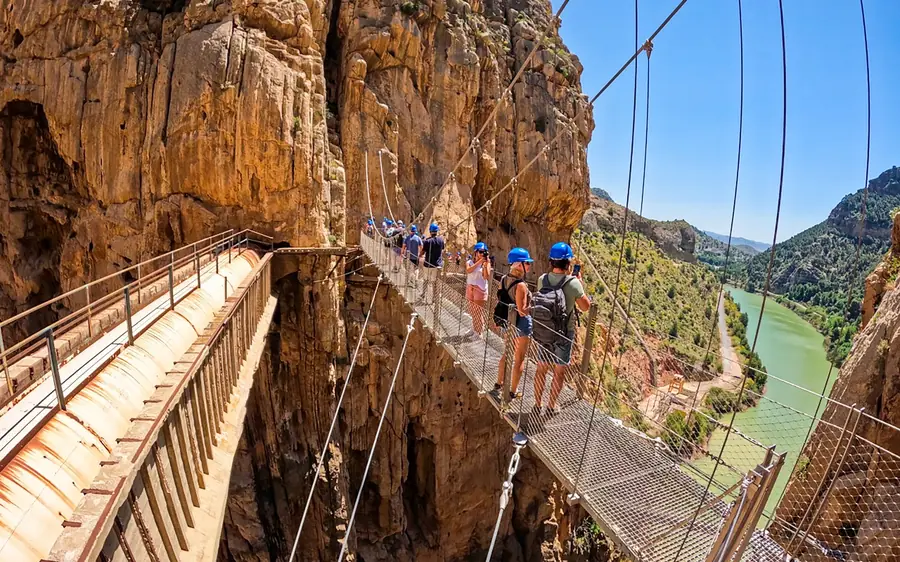
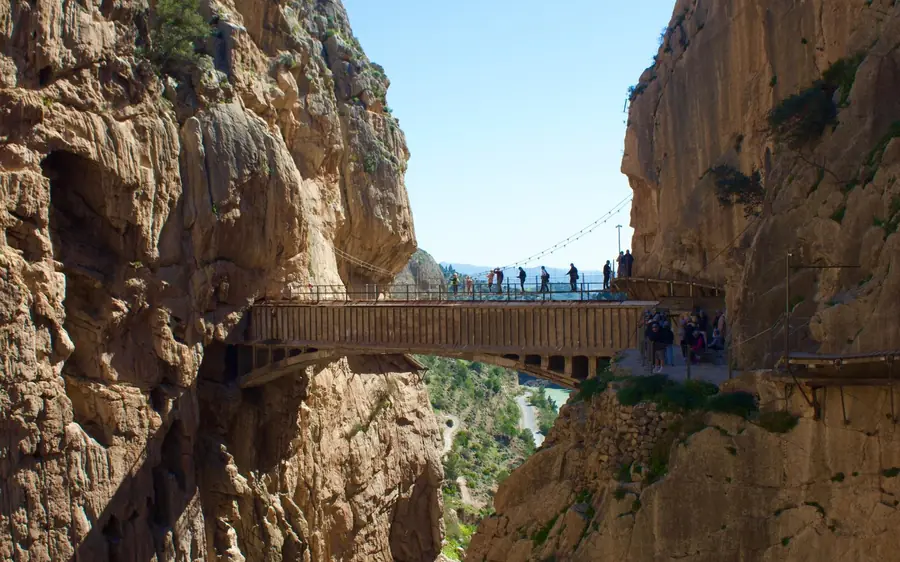
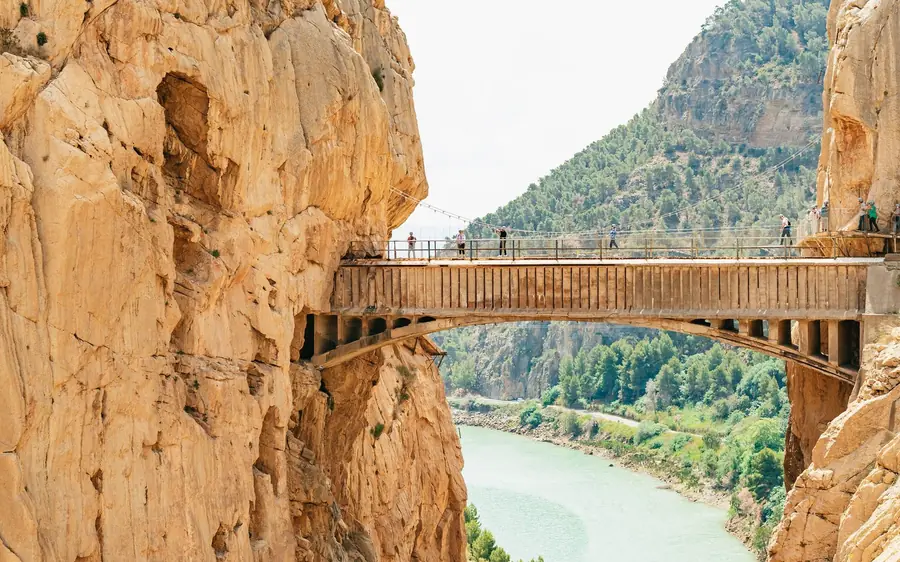
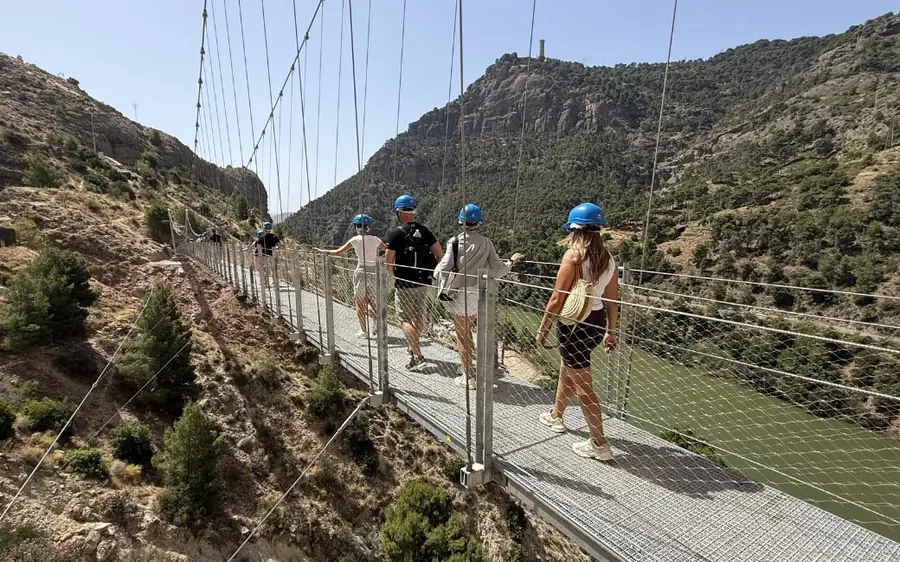
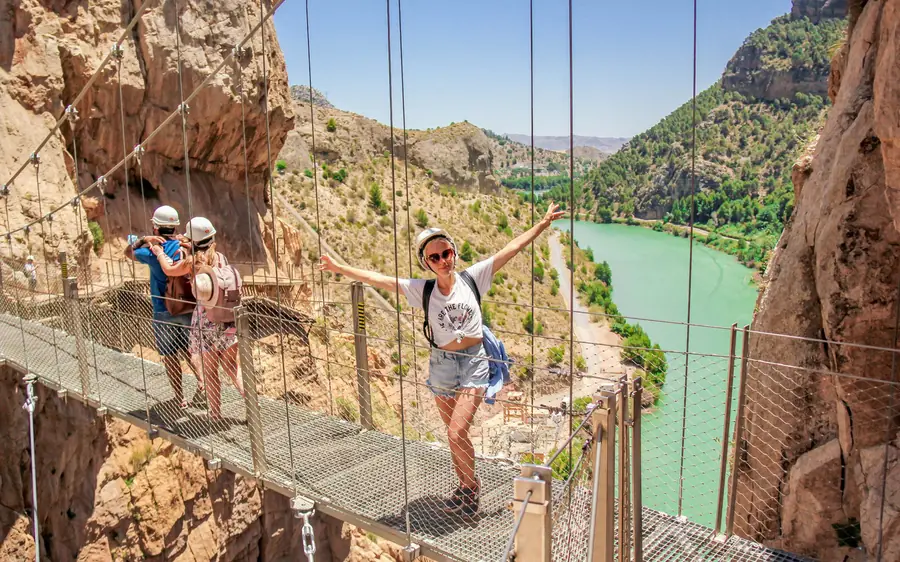
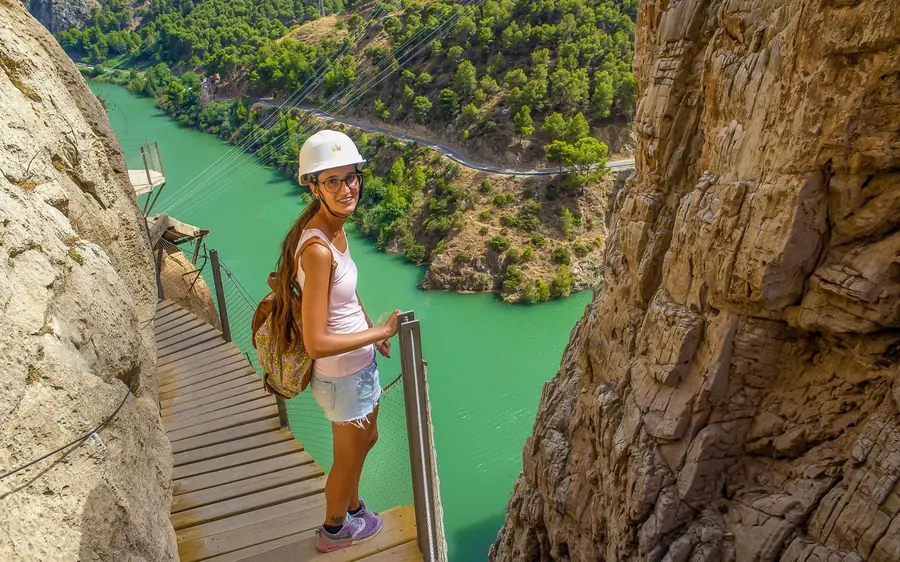
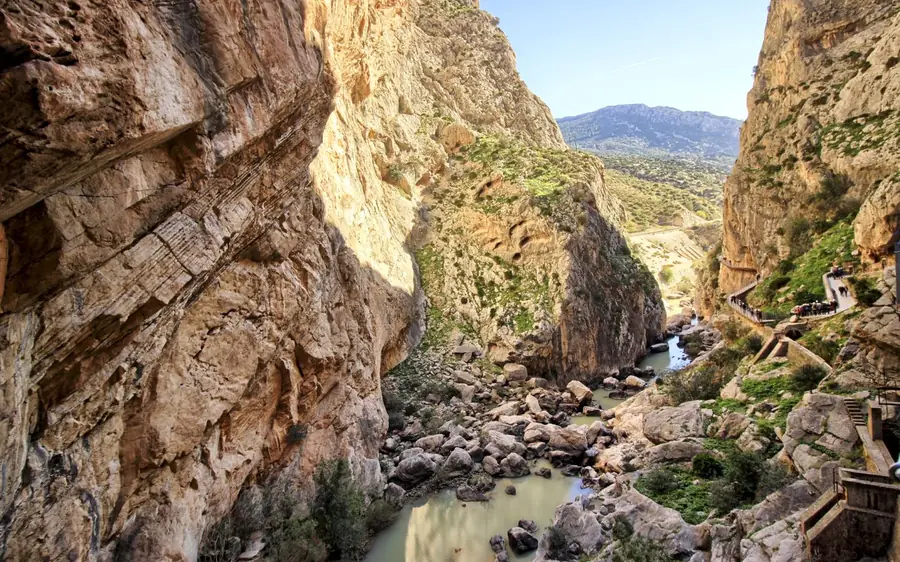
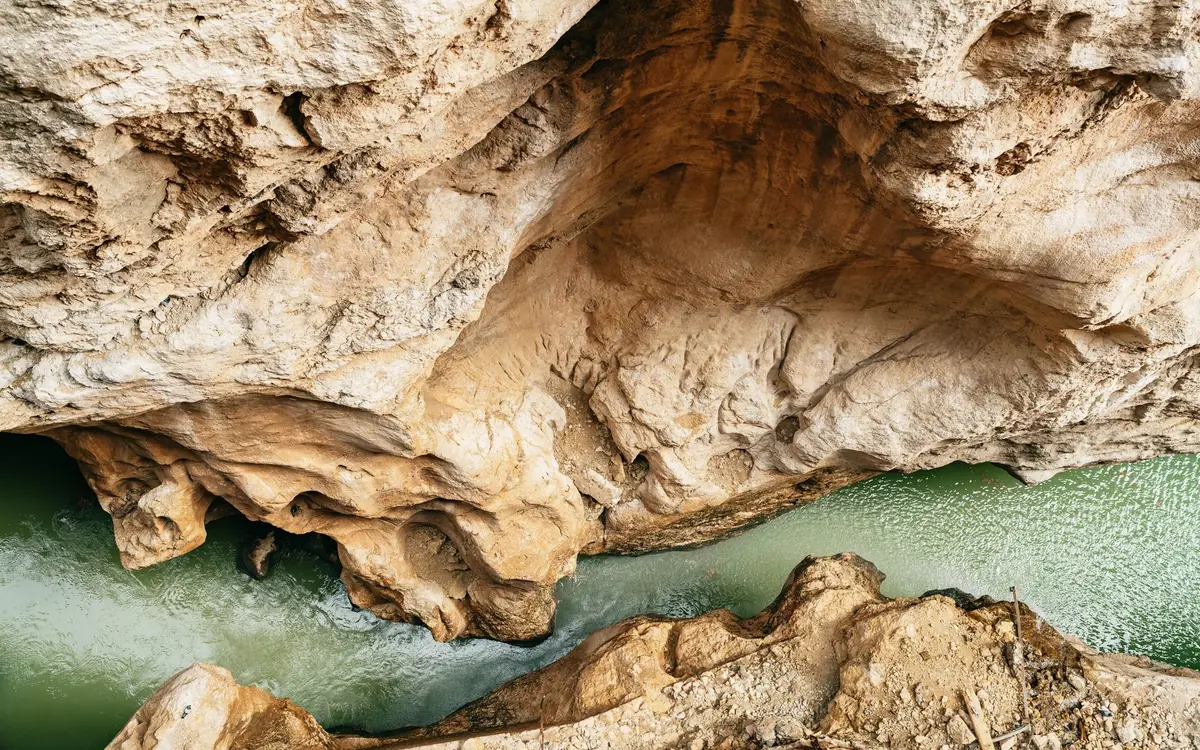
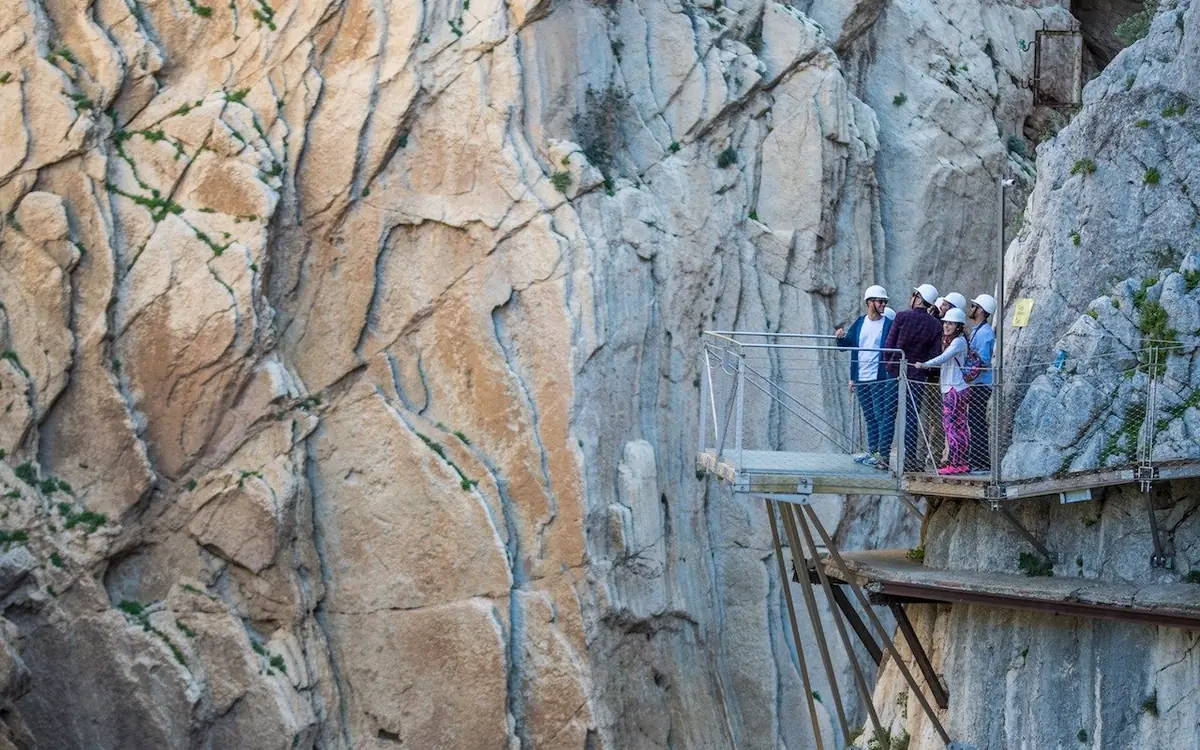
The gorge itself is the point. The Desfiladero de los Gaitanes narrows to about ten metres across in places, with walls rising a hundred and more above the Guadalhorce. The water is a startling turquoise, which is not enhancement: it is limestone flour suspended in the reservoir. There is one suspension bridge across the narrowest section, with a glass panel underfoot, and it moves.
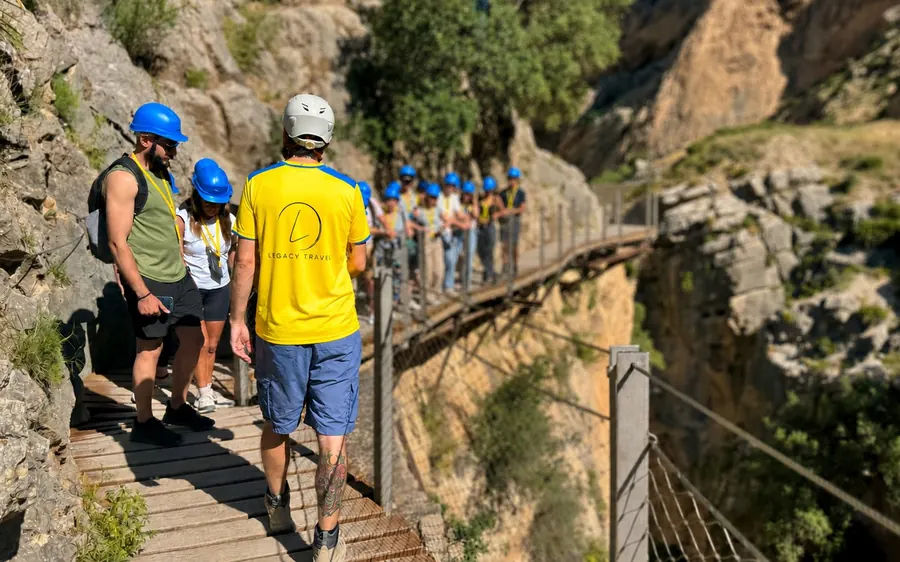
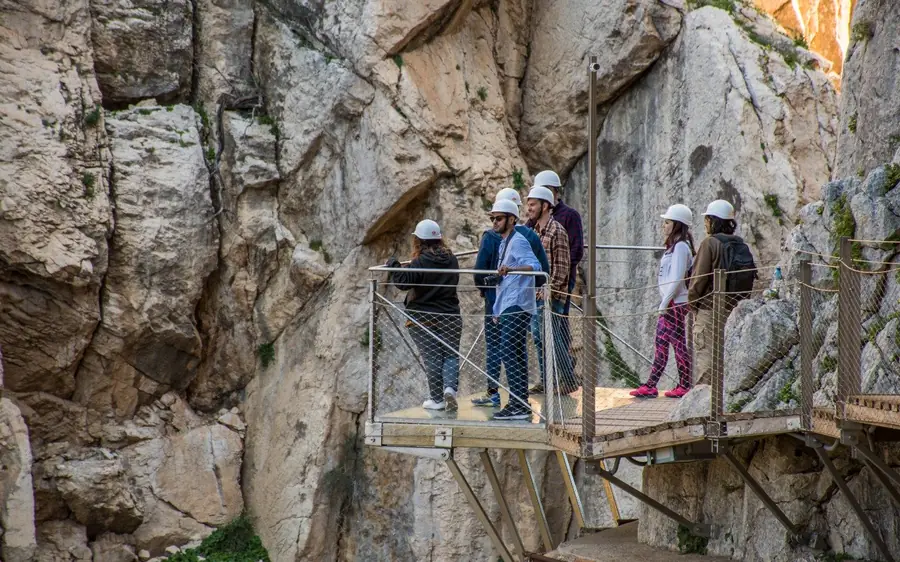
A word about who cannot go. Children under eight are not admitted at all — this is a rule of the route, not of any operator, and no ticket gets round it. A helmet is issued at the entrance and wearing it is compulsory for the entire walk. The route is closed in high wind and in extreme heat, which in an Andalusian summer is a real possibility rather than a formality.
On timing: entry is by fixed slot, as at most Spanish monuments, and the walkway is one-directional, which means you move at the pace of the people in front of you. There is nowhere to overtake on a metre-wide walkway. This is why a small group matters more here than the price difference suggests, and why the first slot of the day is worth having.
And the arithmetic of the day tours, which looks worse than it is. Entry with a guide is around thirty dollars; a full day out of Málaga is around seventy. For that difference you get the coach both ways, the entry, the guide and the shuttle from the southern exit — which, if you were driving yourself, you would have to solve anyway. If you do not have a car, the day tour is not the expensive option. It is the only sensible one.